Physics / 9 min read
More energy buys less and less speed.
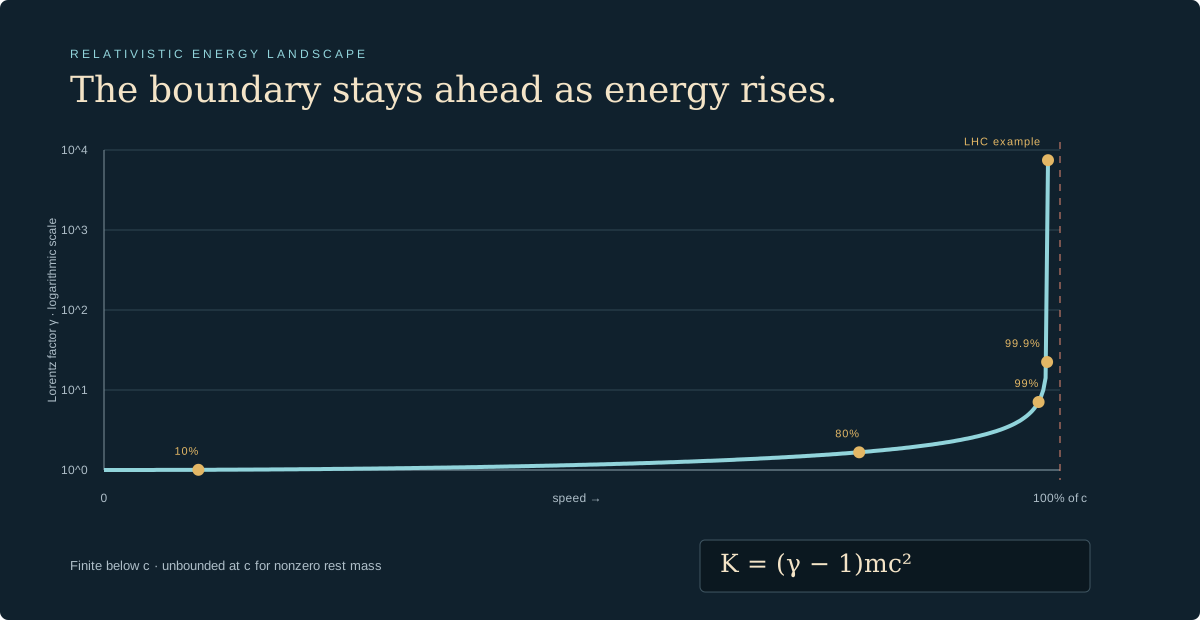
The speed of light is not merely a very large number. Explore how relativistic energy rises without limit as a massive object approaches c—and why light itself is different.
Read the storyTHE FIRST EDITION — ON TIME
Ideas that change how we see the world.
And the people who helped us see them.

Physics / 9 min read
The speed of light is not merely a very large number. Explore how relativistic energy rises without limit as a massive object approaches c—and why light itself is different.
Read the storyHistory / 10 min read
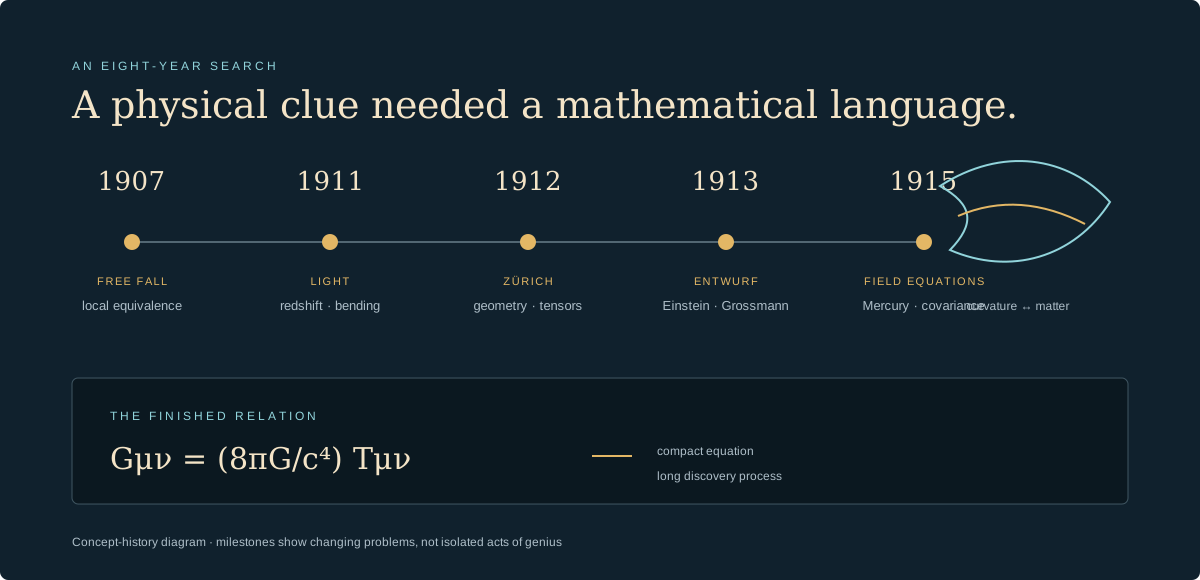
Einstein’s path from the 1907 equivalence principle to the 1915 field equations was neither instant nor solitary. Follow the wrong turns, collaborators, and tests that shaped general relativity.
Read the storyPhysics / 9 min read
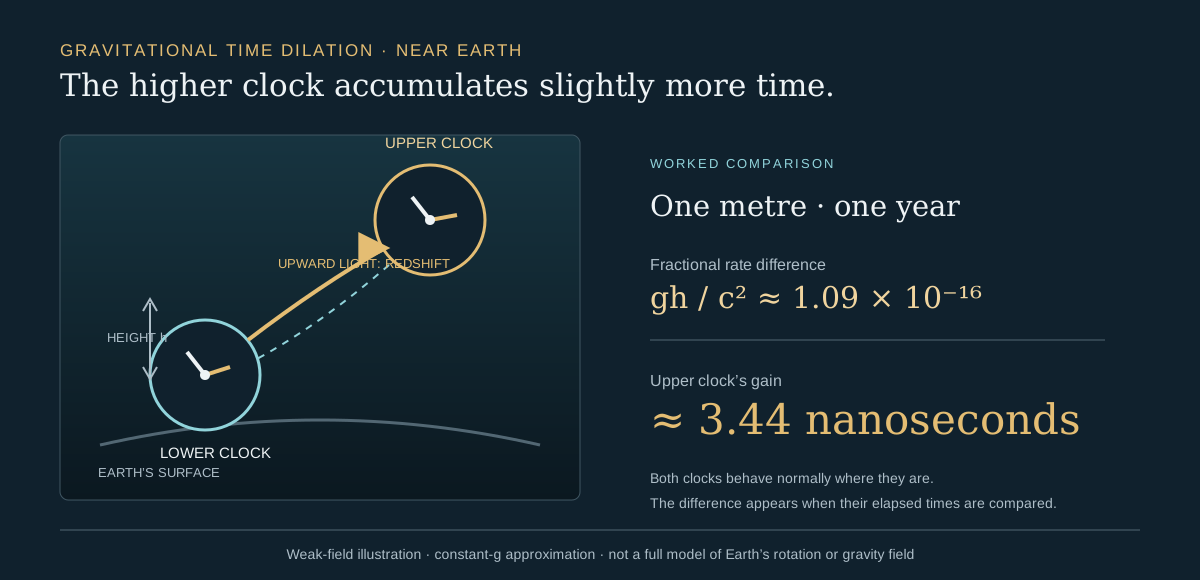
Gravity changes how much time clocks accumulate. Explore gravitational time dilation, redshift, Einstein’s elevator, and a worked clock-height comparison.
Read the storyHistory / 9 min read
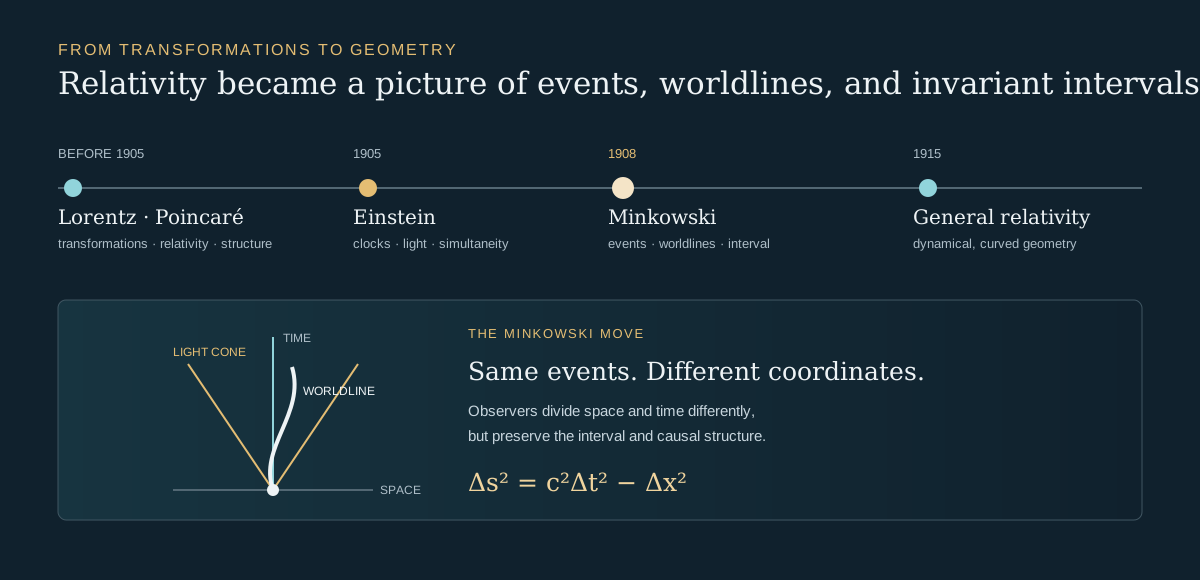
Einstein supplied the physical principles. Minkowski revealed their four-dimensional geometry. Follow the people, ideas, and limits behind spacetime.
Read the storyPhysics / 9 min read
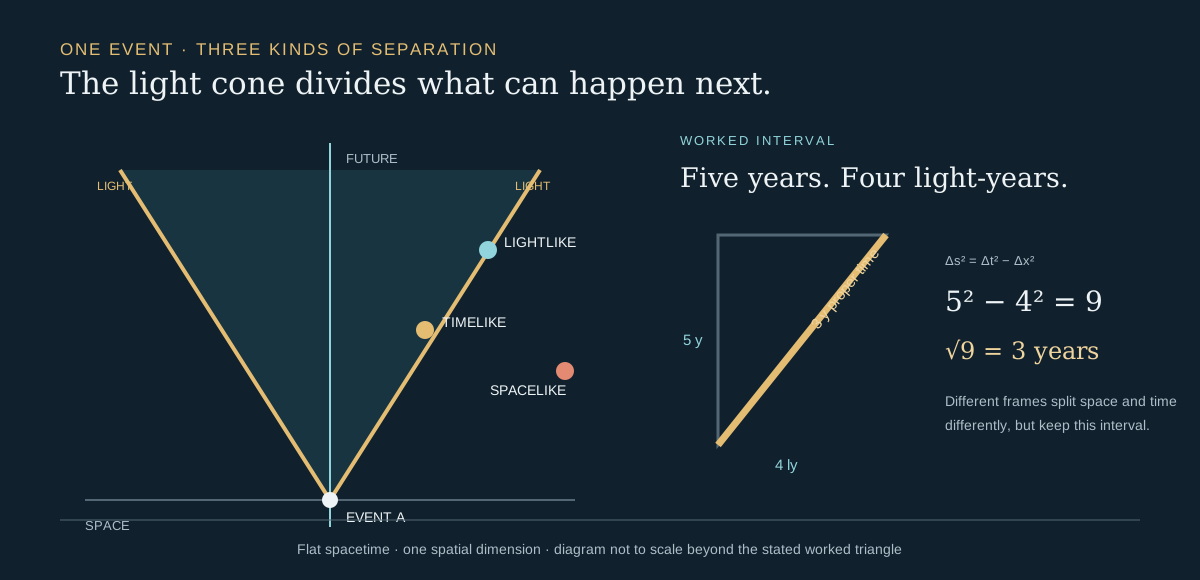
Spacetime combines where and when into one geometry. Explore light cones, classify event pairs, and see why the spacetime interval stays invariant.
Read the storyPhilosophy / 9 min read
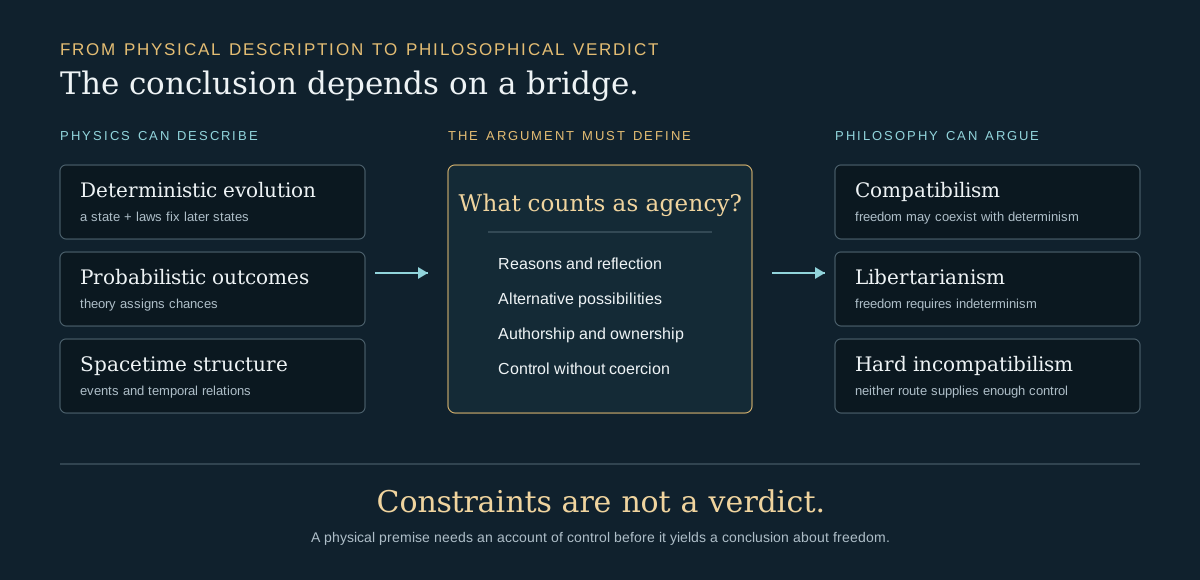
Determinism, quantum randomness and relativity constrain the free-will debate—but none alone decides whether choices are free. Compare the leading philosophical positions.
Read the storyPhysics / 8 min read
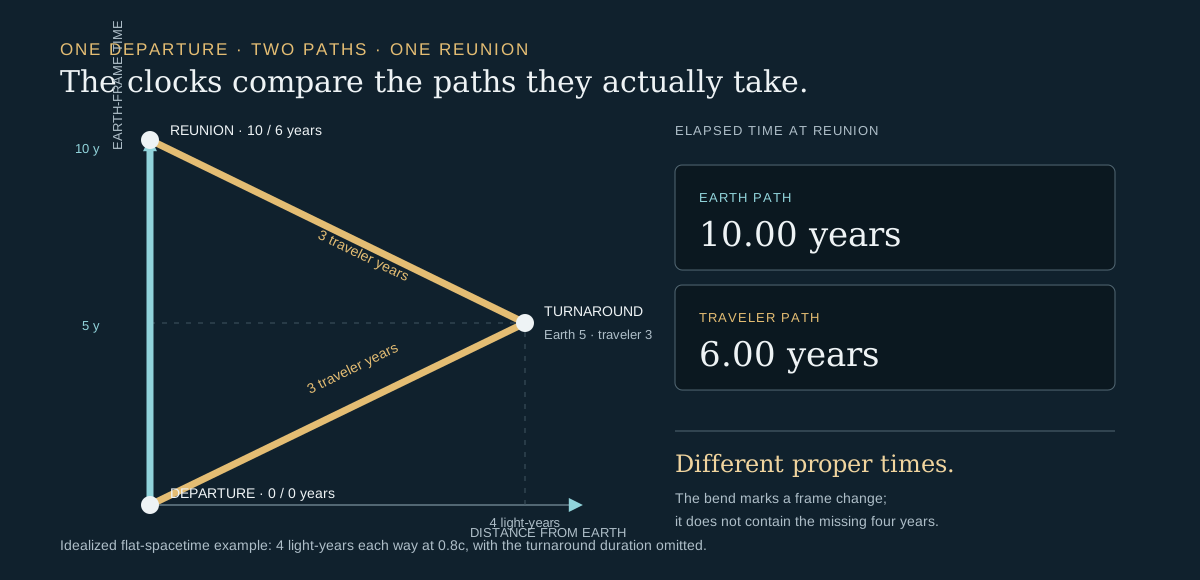
The twin paradox is resolved by comparing complete paths through spacetime. Calculate a round trip and see why the traveling twin returns younger.
Read the storyHistory / 8 min read
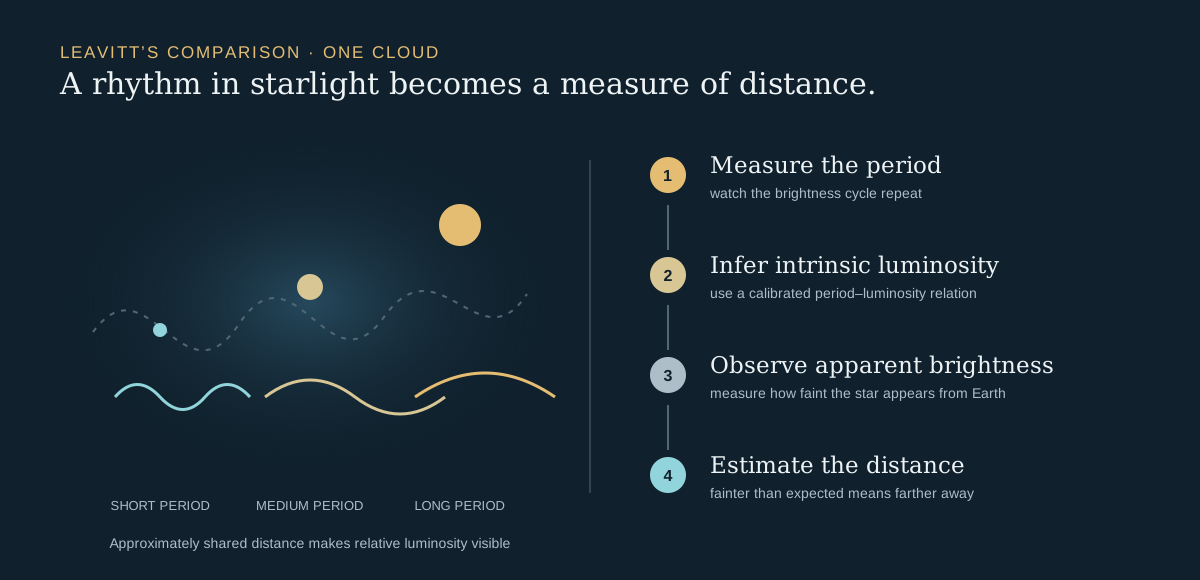
Henrietta Leavitt found that brighter Cepheid variables pulse more slowly. See how that pattern became a crucial rung in the cosmic distance ladder.
Read the storyPhysics / 8 min read
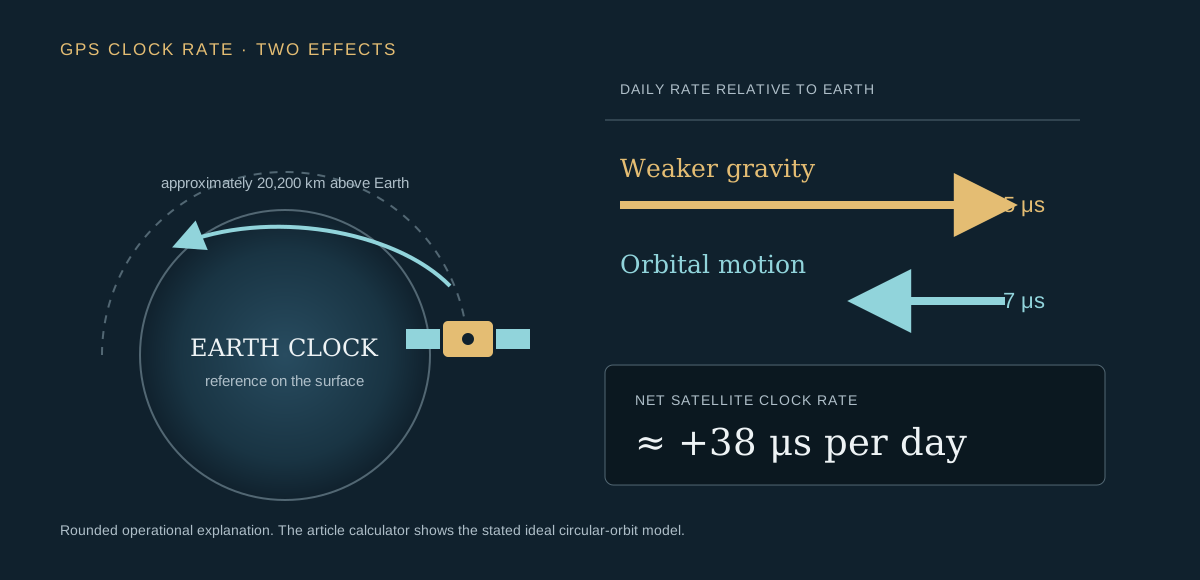
GPS satellite clocks run slower because of motion but faster because gravity is weaker in orbit. Calculate both effects and see why navigation must account for Einstein.
Read the storyHistory / 8 min read
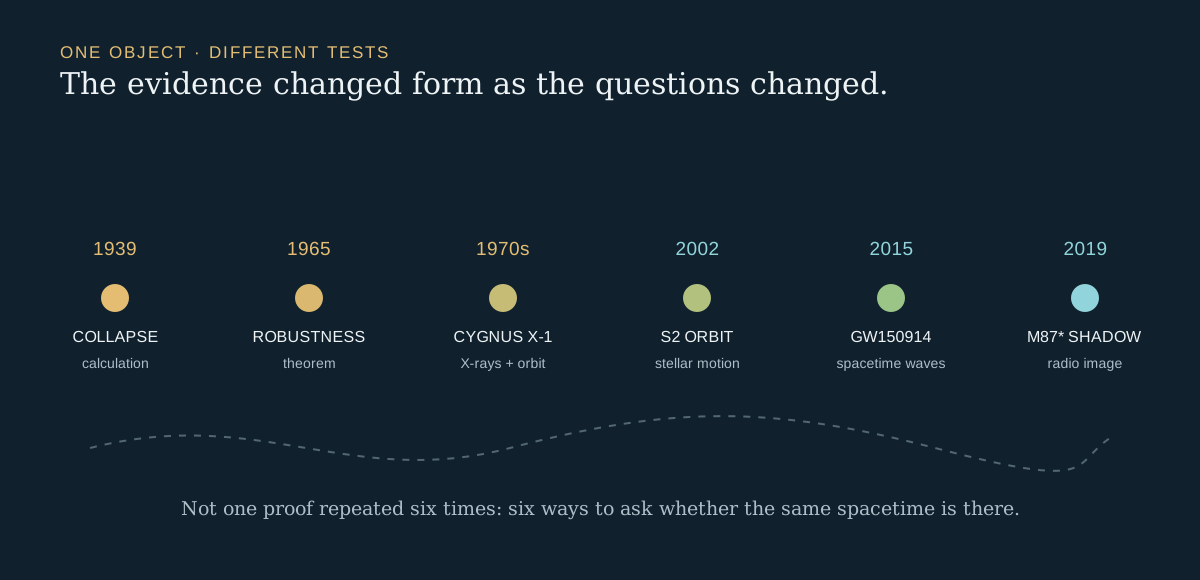
Black holes moved from a troubling prediction to an observed population. Follow the theory, skepticism, and independent evidence that changed scientists’ minds.
Read the storySpace / 7 min read
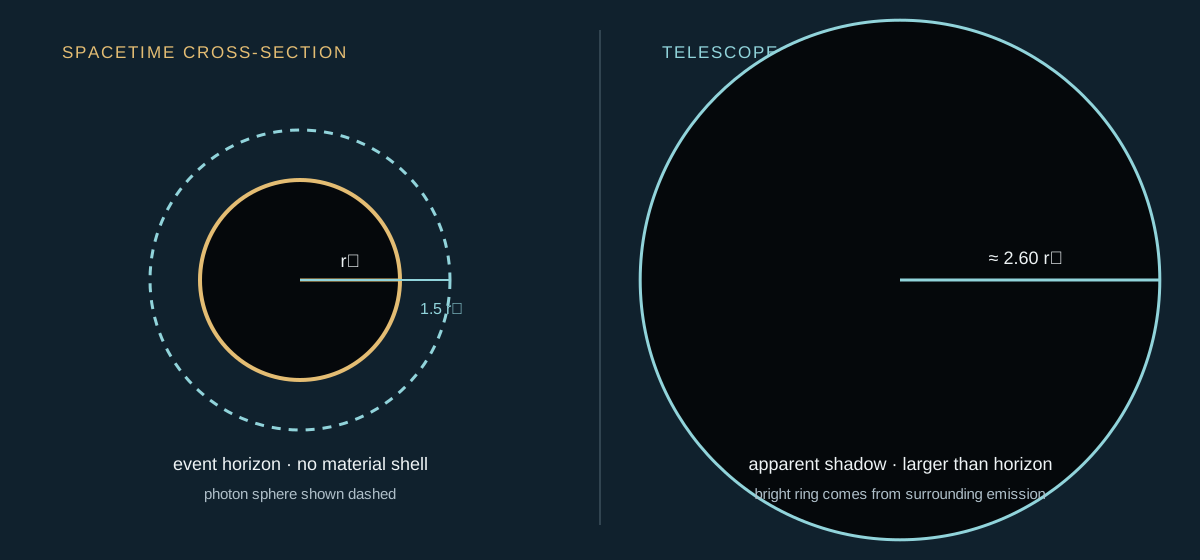
An event horizon is a one-way boundary in spacetime, not a solid shell. Calculate its size, follow what falling observers measure, and learn why a black hole’s shadow is larger than its horizon.
Read the storyHistory / 7 min read
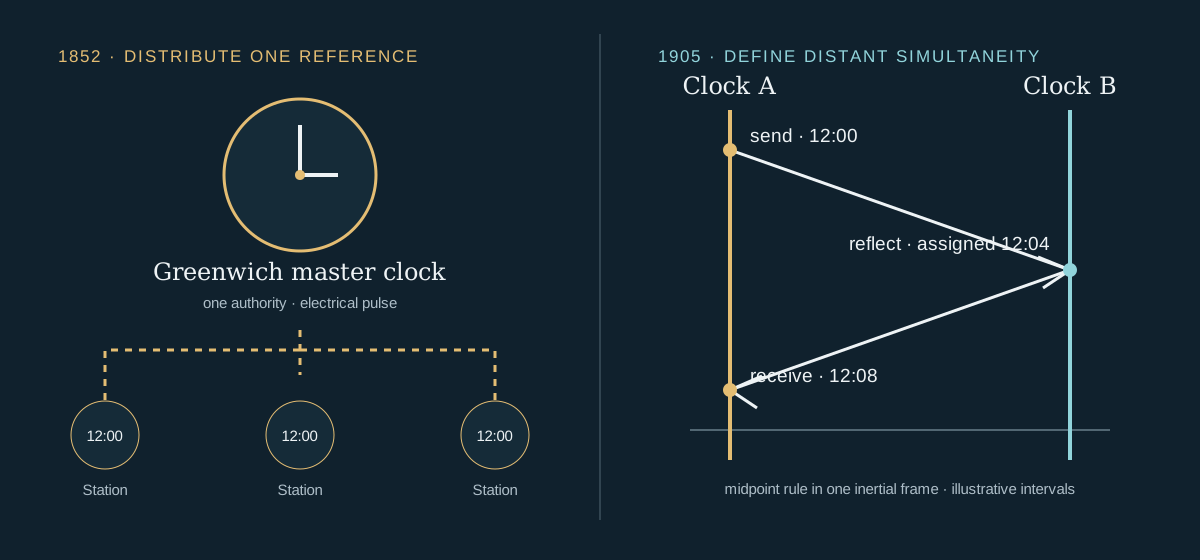
Railways needed common schedules, telegraphs carried clock signals, and Einstein asked what synchronizing distant clocks really means. Follow the history from local noon to relativity.
Read the storyPhysics / 6 min read
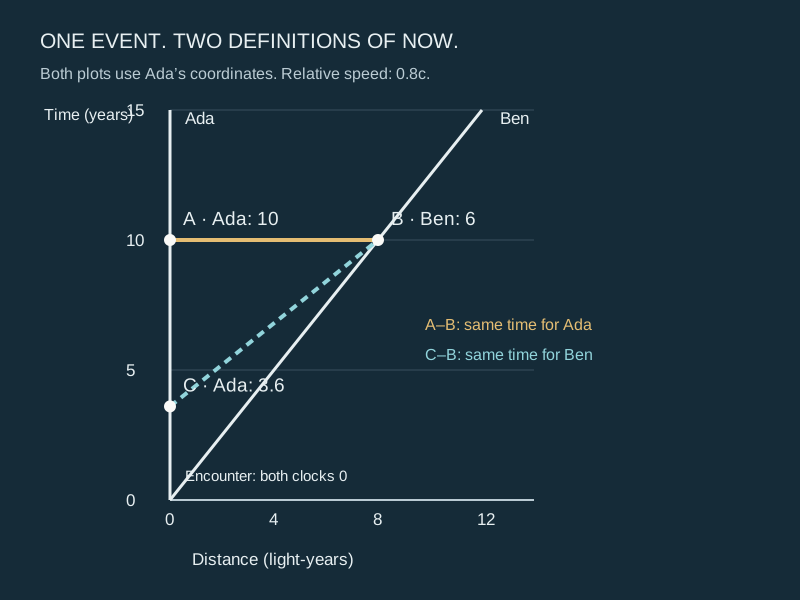
Mutual time dilation is possible because moving observers disagree about distant simultaneity. Follow one encounter, three events, and a worked example at 80% of light speed.
Read the storyHistory / 7 min read
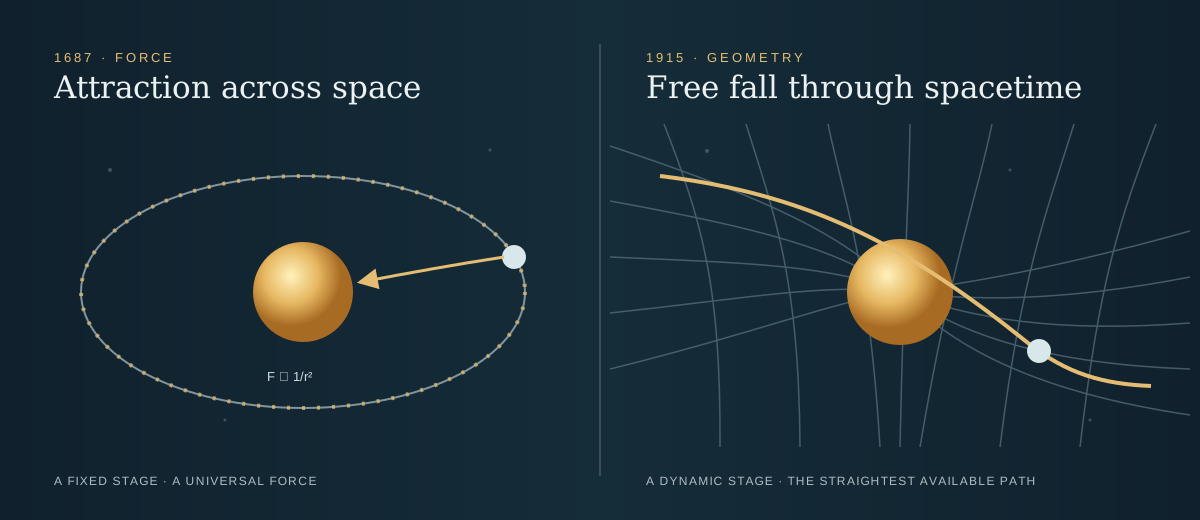
Newton described gravity as a universal attraction. Einstein recast it as spacetime geometry. Here is what changed, what survived, and how Mercury and a solar eclipse tested the difference.
Read the storyPhysics / 5 min read
Special relativity describes flat spacetime; general relativity makes gravity part of its geometry. Explore the difference through clocks, free fall, and Einstein’s elevator.
Read the storyPhysics / 5 min read
Moving clocks can measure less elapsed time. Here is what time dilation means, why it happens, and what a journey at 80% of light speed would look like.
Read the storyHistory / 4 min read
Light, atoms, space, and energy: a guide to Einstein’s four landmark papers of 1905, and why his story is bigger than a lone-genius myth.
Read the storyPhilosophy / 4 min read
The block universe treats events across time as part of one spacetime. Explore eternalism, presentism, and why relativity does not settle every philosophical question.
Read the storyEXPLORE TIME / THREE CONNECTED ARTICLES
A three-article introduction to time: learn why clocks can disagree, discover Einstein’s ideas, then explore whether the future already exists. Read in order, or choose the question that interests you.
TRY IT YOURSELF
A free, ten-minute activity: make a prediction, test four speeds, and check your explanation.
Start the time-dilation activity ↗FROM THE OBSERVATORY
We connect scientific ideas with their history and philosophical consequences. Clear explanations, useful visuals, and sources you can follow.
Our editorial approach ↗